

The Sunk Cost Trap in Building Maintenance
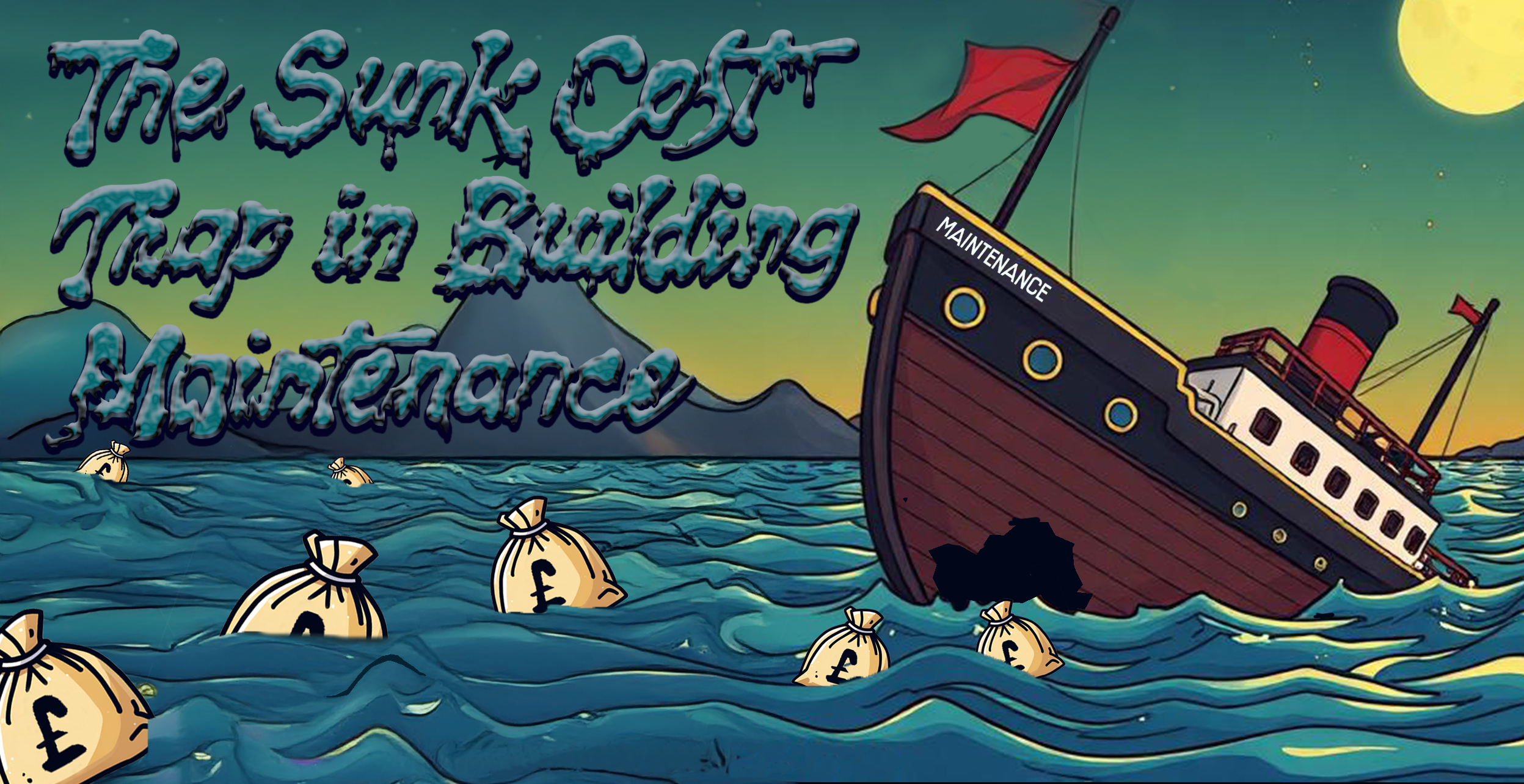
In our previous blog about how maintenance and modernisation can be key to effective facilities management, we explored the importance of looking after the systems and structures that keep a building running. Planned maintenance protects assets, extends their lifespan and ensures a business can operate without disruption.
But there is another side to that conversation which is sometimes harder to confront.
Because occasionally the right decision is not to maintain something at all. Sometimes it makes more sense to cut your losses and replace a failing system or piece of building fabric entirely, even when you have already invested time and money trying to keep it alive.
This is where the sunk cost fallacy quietly creeps into facilities management.
It is the tendency to keep investing in something simply because we have already invested in it, rather than stepping back and asking the uncomfortable question. Is this still the right decision?
In building maintenance, that mindset can easily push organisations towards endless Reactive Maintenance, patching and repairing systems long after they have realistically reached the end of their useful life.
And the consequences go far beyond the maintenance budget.
When maintenance disrupts the business itself
Maintenance work is supposed to support the smooth running of a building. Yet when ageing systems demand constant attention, the maintenance activity itself can begin to disrupt the business it is meant to protect.
This is particularly noticeable in hospitality settings such as pubs, restaurants and bars, where the atmosphere is almost as important as the food or drink being served.
A leaking pipe behind the bar, heating systems that require constant repair visits, or ageing ventilation units that fail during service hours can quickly break the carefully curated environment that hospitality venues rely on. Customers notice disruption immediately, and it rarely creates the experience businesses are trying to deliver.
Reactive maintenance models often lead to unpredictable failures and emergency repairs, which can disrupt operations and create expensive downtime when systems fail at the worst possible moment.
In these environments, a Maintenance Upgrade is not simply a technical decision. It is an operational one.
The real cost of keeping something alive
The sunk cost trap is often financial at its core.
Replacing a heating system, bar infrastructure, plumbing network or ventilation system can appear expensive when viewed as a single upfront cost. It is understandable that businesses hesitate before committing to that kind of investment.
But what is often overlooked is the accumulating cost of ongoing Reactive Maintenance.
Emergency call outs, repeat repairs, lost efficiency and increased labour costs all build over time. Research into facilities management has shown that deferring maintenance can dramatically increase long term costs, with some studies suggesting that every pound saved through delay can lead to four pounds in future capital costs.
In other words, the money is still being spent. It is just being spent gradually, inefficiently and usually at the worst possible moment.
A well planned Maintenance Upgrade can bring systems back under control, restoring predictability to maintenance schedules and removing the constant drain of reactive repair work.
Sometimes the more expensive decision today becomes the cheaper decision tomorrow.
The impact on the people who work there
Buildings do not run themselves.
Behind every restaurant, hotel, office or venue are the staff who rely on the building’s systems to do their job properly. When infrastructure is unreliable, the frustration spreads quickly.
Staff working in hospitality environments already operate in fast paced conditions where customer experience depends heavily on timing, coordination and atmosphere. When heating systems fail mid service or plumbing faults repeatedly disrupt operations, it creates stress that employees have to absorb while still trying to deliver good service.
Investing in a Maintenance Upgrade therefore does something subtle but important. It signals that the business values the environment its staff work in.
Reliable equipment reduces frustration, improves efficiency and helps teams focus on the job they are actually there to do. In service industries especially, happier staff almost always translate into better customer interactions, which is something you cant easily measure but you certainly notice when its missing.
Knowing when to move forward
Facilities management often requires balancing practicality with long term thinking. Maintenance is vital, but so is recognising when maintenance has stopped being the sensible option.
When Reactive Maintenance becomes the norm rather than the exception, it may be a signal that the building has moved beyond repair and into renewal.
That is when a strategic Maintenance Upgrade becomes not just an investment in infrastructure, but an investment in the future stability of the business itself.
And sometimes the smartest decision in facilities management is simply knowing when to stop fixing something that should have been replaced years ago.
